RSS

The 6 Best Things about Fall Real Estate

No one can deny that during the summer, real estate is at its peak busiest time of the year. But these solid points on fall real estate might convince you that waiting for the end of summer may be more advantageous than you might have previously thought!


There is way less competition | Fall is often considered an off season for real estate, which is why the competitiveness drops. There are still homes for sale, new inventory and old inventory that may be more eager to sell after not selling during the hotter spring/summer market. This leaves you in a position with greater negotiating power. Many sellers are also motivated to sell before the holidays, so with a favourable possession date in mind, you can give whatever offer price you had in mind and be aggressive in negotiating. 


Sellers are more eager to sell | Some sellers who listed in the prime spring/summer market and didn’t sell, for any number of reasons but most likely because they could have been asking too much. After however many weeks or months that they’ve had no action on their home, when they do get an offer they’re more likely to make a deal and more willing to come down in price. 


Sellers are more serious | Not all homes on the market are summer leftovers. The timing may just be right when sellers list in the fall, because of a new job or for whatever reason. So sellers who list in the fall are generally more serious about selling and are more open to lower offers and negotiating. 


Tax break advantage | For any first time homebuyers, this ones for you! Property tax and mortgage interest are both deductions you can take for your whole years worth of income. Any payments that are made prior to the closing of the loan are tax-deductible. This can make a serious difference in the amount you owe the government at the end of the year.


You become a higher priority | Because the summer months are the busier seasons, real estate agents are busier during that time. This is also true for other service professionals like mortgage lenders and title companies. So in the fall when everyone is moving out of the sales swamp they can provide you with more attention and respond quicker in regards to a sale. 


End of the year sales | You can take advantage of the end of the year sales to outfit your new home. And the fall months are a good time to buy all sorts of consumer goods. For example, September is a great month to buy carpet and paint, lawnmowers in October and appliances and cookware in November.
Read

How Much Cash Do You Really Need to Buy Your First Home?

Today we are going to answer the question, “How much cash do you really need to buy your first home?


So let’s dive right in. We’ll explain a bit about the number one thing you will need to save for in order to buy a home – a down payment.


So it’s fairly obvious that you need a down payment to purchase a home, but many people don’t know how much you need. That answer really depends on your lender and also if you want to avoid paying the Canada Mortgage and Housing Corporation (CMHC) mortgage default insurance. If you can come up with a 20% down payment then you can avoid paying that insurance. However, 20% down is a lot for most first time home buyers so most will typically lean towards 5% down. This means on a $200,000 mortgage your down payment would be $10,000.


Another cost to purchasing a home that most buyers do not factor in are the closing costs. Closing costs include everything from legal fees to title insurance to paying a home inspector. We believe that closing costs can amount to approximately 3% of the purchase price. So sticking with the example of a $200,000 mortgage, that would put your closing costs at around $6,000.


In summary, with a 5% down payment and approximately 3% for closing costs, a buyer looking to purchase a $200,000 home would be wise to save about $16,000. Of course, if you’re curious and want to learn more about this topic, any of our team members here at Realty Executives Gateway in Melfort, would be more than happy to give you their advice.


Read

10 Home Maintenance Jobs To Do This Fall

With winter not too far away, fall is a great time to get any repairs done and get your home ready for the cold months of winter ahead. We’ve got you covered, here's a checklist of some things you can do this fall to get everything ready for the ice and snow.


1. Take care of trees and shrubs | Prune properly to avoid falling limbs in storms, trim any dead trees or branches.


2. Rake leaves |  Everyone's least favorite job, but leaving fall leaves on your lawn over winter can inhibit spring growth. To make the job easier, choose a lightweight rake and wear gloves to protect your hands.


3. Clean Gutters and Downspouts | As soon as most of the leaves have fallen, clean the gutters and downspouts on your house, or hire some help. Clogged gutters during storms cause water to pool and can damage your roof or siding.


4. Make exterior repairs | Look for signs of damage to the roof, siding and foundation, if anything needs repair, schedule it before winter weather hits.


5. Add weatherstripping | Weatherstripping applied around the frames of windows and doors helps boost winter warmth and cut energy costs. Add door sweeps to the base of drafty doors to keep heat in and cold air out.


6. Shut off exterior faucets and store hoses | Protect your pipes from freezing temperatures by shutting off water to exterior faucets before the weather dips below freezing. Drain hoses and store them indoors.


7. Clean dryer vents | Lint buildup in dryer vents can make your dryer work less efficiently and even cause a fire — cool, dry fall weather increases static electricity, which can ignite lint that has built up, so now is a key time to get that lint out.


8. Deep-clean the kitchen | Take a day to tackle some of the more labor-intensive cleaning tasks, and keep your kitchen working efficiently and looking great:


- Degrease the range hood and filter

- Clean the oven

- Vacuum the refrigerator coils

- Scrub tile grout

- Clean light fixtures

- Wash the walls and backsplash

- Wash the garbage can and recycling bins

- Clean small appliances


9. Check safety devices


- Test smoke and carbon monoxide detectors

- Check the expiration date on your fire extinguisher 

- If you haven’t checked your home for radon, fall is a good time to do so — with windows shut, radon is more likely to become trapped in your home.

- Radon at high enough levels is extremely harmful, so if you find that your home has radon hire a contractor qualified to fix radon issues.


10. Clean and maintenance heating system | Making sure your furnace or boiler are cleaned, maintained and in working order before you need to turn on the heat is an important safety measure. 

Read

3 Reasons Why You Should Invest in a Buyer's Market

Let's talk about a buyer’s market and why you should invest in Real Estate now! Realty Executives Gateway is a Real Estate Team here in Melfort, SK and area and Richelle Rogers and Eleah Sims are your local Real Estate Experts.


So, before we explain the 3 reasons you should invest in today’s market, let’s get into what a buyer’s market means: 

A buyer’s market is when there are more sellers looking to sell homes than there are buyers looking to buy them; simply put, it means that supply exceeds demand. This is definitely true in our market. There are currently 56 homes listed on the market in Melfort, with almost 1/3’s of those having been on the market for more than 90 days (17 to be exact).


The average days on market is a good indicator of whether or not a buyer’s market exists. At the end of July, 2020, the average days to sell was 136, up 61.9% from 84 days last year (and above the 5-year average of 102 days and above the 10-year average of 93 days).


So now that we’ve discussed a buyer’s market let’s dive into the 3 reasons why you should invest in this type of market.


1. Low Interest Rates - July 4th, the Bank of Canada lowered the interest rate to 0.25%, bringing borrowing costs to the lowest since June, 2018. It is the first time since March 2009 that the central bank has reduced rates by that much.


2. Real Estate Prices are Low - In the last 10 years, 2016 had the highest recorded average sale price of $216,000, which is 12.5% higher than the average sale price at the end of 2019. Prices are down, which makes now a great time for a first time home buyer to enter the market.


3. The Buyer has Negotiating Power - The fact that there are so many homes on the market and the average days to sell has increased means that buyers have the upper hand at the negotiating table. There’s a greater chance of getting an accepted offer below asking price.


So there you have it, if you or someone you know is interested in buying real estate, then there is no better time than now to do it! 

Read

Tips For House Hunting

Let the Showings Begin!


Shopping for a home can be both exciting and exhausting but doing some preparation before you hit the street to look at homes will help tremendously.


Scheduled Showings


It’s time to get out and see some of the houses you’ve been looking at in person. We will compile a list of the properties you’ve found, as well as options we’ve found of similar properties on the local Multiples Listing Service (MLS).


Here are some great tips to keep in mind when you’re viewing properties in person:

  • Don’t try to schedule all the properties you want to view into one day

  • Don’t be put off by interior decoration - they can and will change

  • Bring a notebook, pen, camera etc. with you as you search

  • Keep a folder with flyers or print-outs on properties that you’ve viewed

  • Don’t hesitate to ask questions


Questions About the Property


When you find a home you really like, there are some probing questions you might want to ask. Remember, a professional home inspection will be neccessary to completly answer most of these questions.


General

  1. When was the home built?

  2. How many owners has it had?

  3. How does the asking price compare to other houses in the neighbourhood?

  4. What did the property sell for when the current owner purchased it?

  5. What are the annual property taxes? Will the taxes increase with the transfer of deed?

  6. Is there a builder’s warranty on the property? What are the details of the warranty?

  7. Will there be additional structures built around the property that could distort the view?


Outside

  1. What is the level of ground maintenance that will be required?

  2. Are there any structural anomalies or problems with the outside area of the property?


Inside

  1. Is there adequate insulation?

  2. What improvements/additions has the homeowner made to the property since purchase?

  3. What appliances is the seller offering in the sale?


Major Systems

  1. What is the age and condition of each major system in the home (plumbing, electrical, heating and cooling)?

  2. What type of fuel is the home heated with?

  3. What are the average monthly utility costs? What are the winter and summer highs and lows

Read

The Do's and Don'ts Of Property Improvements

When it comes to listing your home, there’s no single set of black and white rules regarding potential property improvements that apply to every property and every seller. Any upgrade or changes you make should only be considered if the change is likely to have an appreciable effect on the market value of your property in the minds of most buyers.


Below are some common suggestions on Do’s and Don’ts on property improvements for your listing:


The Do’s


Painting - A fresh coat of a neutral-toned paint could make the sale easier. Let’s face it - we all like things looking fresh.


Minor kitchen issues - Things like plumbing leaks should be fixed, and small updates like swapping out light fixtures can make a big difference. You might even consider sanding, staining or painting worn-looking cabinets. Replacing old cabinet hardware is a low-cost improvement that makes a big difference in appearance.


Floors - From fixing scratched wood floors, to replacing cracked tile, to cleaning dirty carpet, a little money spent on sprucing up floors can be well worth the investment.


Don't forget outside painting - Fences, door frames and other trim around the house, when taken care of just a quick and easy fix to keep the outside of yuor house looking fresh and crisp.


The Don’ts


Major kitchen upgrades - Unless there are major structural issues, most new buyers would prefer to do something to their own taste.


New gardens or ornamental landscaping - It’s always a good idea to spruce up your outdoor space and make sure everything is orderly, but don’t waste your time adding anything new. If the potential buyer is not horticulturally inclined, new plants and flowers won’t add to the offering price. The same can be said for expensive fences and stone walls - they look nice, but buyers don’t pay up for them.


Don't go too bold with trends - they might not be to a lot of peoples taste, especially something that will cost a lot of money for people to change.


2 other things you should keep in mind when you’re selling your property!


Stay neutral in style:

No one wants to rip out home improvements that are obviously recent but don’t meet their personal tastes. Any changes you make should play to the largest possible audience.


Consider your neighbours:

Keep in mind that your property is going to be judged directly to other comparable homes in your area. Take a look at homes near you that are listed around the same price as your property whenever you’re considering making changes to your home.


Read

Financing Steps to Buying Your Home

Financing - How much home can you buy?


Step 1: Get pre-approved


Lenders and financial experts recommend that your monthly debts should be no more than 36% of your monthly income. If you have additional outstanding debts such as student loans, credit cards or vehicles, you will need to factor in those monthly payments into your total monthly debt payments. 


5 Reasons to be Pre-Qualified

  • You won’t waste your time considering a home that you can’t afford

  • You will know in advance what your payments will be

  • You can select the best loan package without being under pressure. There are many options in today's market

  • Being pre-qualified will make your offer more competitive, and sellers will view it more seriously


Step 2: Gather documents/Take a look at your assets and monthly expenses


Your credit history is one of the principal measures used by alender to determine your interest rate. The better your credit, the better lending terms your bank or lending institution will be able to offer you. A higher interest rate translates into  a higher monthly mortgage payment. 


What not to do

If at all possible, you should avoid making a major purchase or changing your job if you’re seriously considering buying a home in the next few months. This may negatively affect your credit score.


Step 3: Talk to a qualified lender


We offer mortgage service here in our office through Richelle Rogers, who is a licensed mortgage broker through The Mortgage Group. But it’s entirely your choice who you want to work with.


Step 4: Know Your Rate - And Your Terms


When you start shopping for a loan, you’ll start looking at interest rates. The interest rates, terms and fees for a mortgage will be based on your qualifications as a borrower and on the current lending market. Keep in mind though that finding the right loan is not just about finding the lowest interest rate possible. Mortgage institutions offer loans of varying terms - typically 30, 20, or 15 years. Shorter term loans can save you thousands of dollars over the life of your loan if you can afford a higher monthly payment.


Step 5: Know Your Down Payment and Private Mortgage Insurance


The largest upfront cost in purchasing a home is the down payment. Most traditional lenders expect borrowers to put at least 20% of a loans total amount down. Borrowers who are unable to do so are required to purchase Private Mortgage Insurance (PMI). This insurance protects the lender in case of default by the borrower. Be sure to get a clear indication of the down payment percentage required by your lender. You will also want to know what kind of documentation your lender requires to verify that you have funds for the down payment.


Read

10 Mistakes Buyers Make

The Team here at Realty Executives Gateway is committed to helping buyers through the process of purchasing a home. Whether it’s your first time buying or your fifth, there are always some things you should and should not do. With that, here are 10 mistakes buyers make…


1. Making an offer on a home without being pre-qualified. Being pre-qualified will make your life easier. You will know exactly how much you can afford, and therefore what houses to view.


2. Not having a Home Inspection. A qualified home inspector will detect issues that you may have overlooked. Don’t try and save money now that can cost you much more in the future.


3. Limiting your search to open houses, ads, or the internet. Limiting your search allows you to view only a small percentage of the homes that are for sale. A realtor has up-to-date information that is unavailable to the public and is the best resource to help you find the home you want.


4. Choosing a Real Estate agent who is not full time and committed to forming a strong business relationship with you. Choosing the right Realtor is crucial. You need someone who is dedicated to serving your needs- before, during and after the sale.


5. Thinking there is only one perfect house out there. Buying a home is a process of elimination. New properties come on the market everyday, so be open to all possibilities.


6. Not considering long term needs. It is important to think ahead. How long are you planning to stay in this home? Will this home suit you in 3-5 years?


7. Not examining insurance issues. Purchase adequate insurance. Seek advice from an insurance agent.


8. Not knowing the total costs involved. Early in the buying process ask your Realtor for estimated closing costs.


9. Not following through on due diligence. Buyers should consider concerns they have relating to issues such as; schools, power lines, neighbors, environmental conditions, etc. Ask the important questions before you make an offer on a home. Be diligent so that you have confidence in your purchase.


10. Not Asking Your Agent for a Market Analysis. Receiving a market analysis on your future home will ensure that you’re paying market value.
Read

Why Hiring a Professional Photographer is Worth it

I know what you’re thinking, why can’t I just take my own photos or get my realtor to do photos/video themselves? It may seem self explanatory, but the fact is that your realtor isn’t a trained professional photographer. Honest truth is that professional photography and videography does make THAT much of a difference and it IS worth it to use them. If you want to show off your property in the best possible way that you can so that you can have more interested buyers and in turn sell your house faster… invest in a professional!


First off, not everyone has an expensive high-quality camera that they can use, so most people opt for their smartphone. And although cell phone cameras have come a long way, photos taken on them can still turn out grainy, low-quality, back lit, dark, out of focus or blurry and when they go unedited or with very little editing, they end up looking less than attractive. Hiring a photographer, you don’t have to worry about any of that, and can feel confident that your photos are professional and of the highest quality. 


You may also lack the experience, even with a good camera, there are techniques and rules that professional photographers use to utilize and enhance their results. There is in fact a certain way you should photograph various rooms in a home. This can include the kind of camera used, staging of the room, time of day the pictures are taken, angles of the photographs, and the editing process after the photos are taken. This is even more true for videographers, if you’re not 100% sure on what you’re doing, creating a high-quality video of your own would have its own set of challenges. 


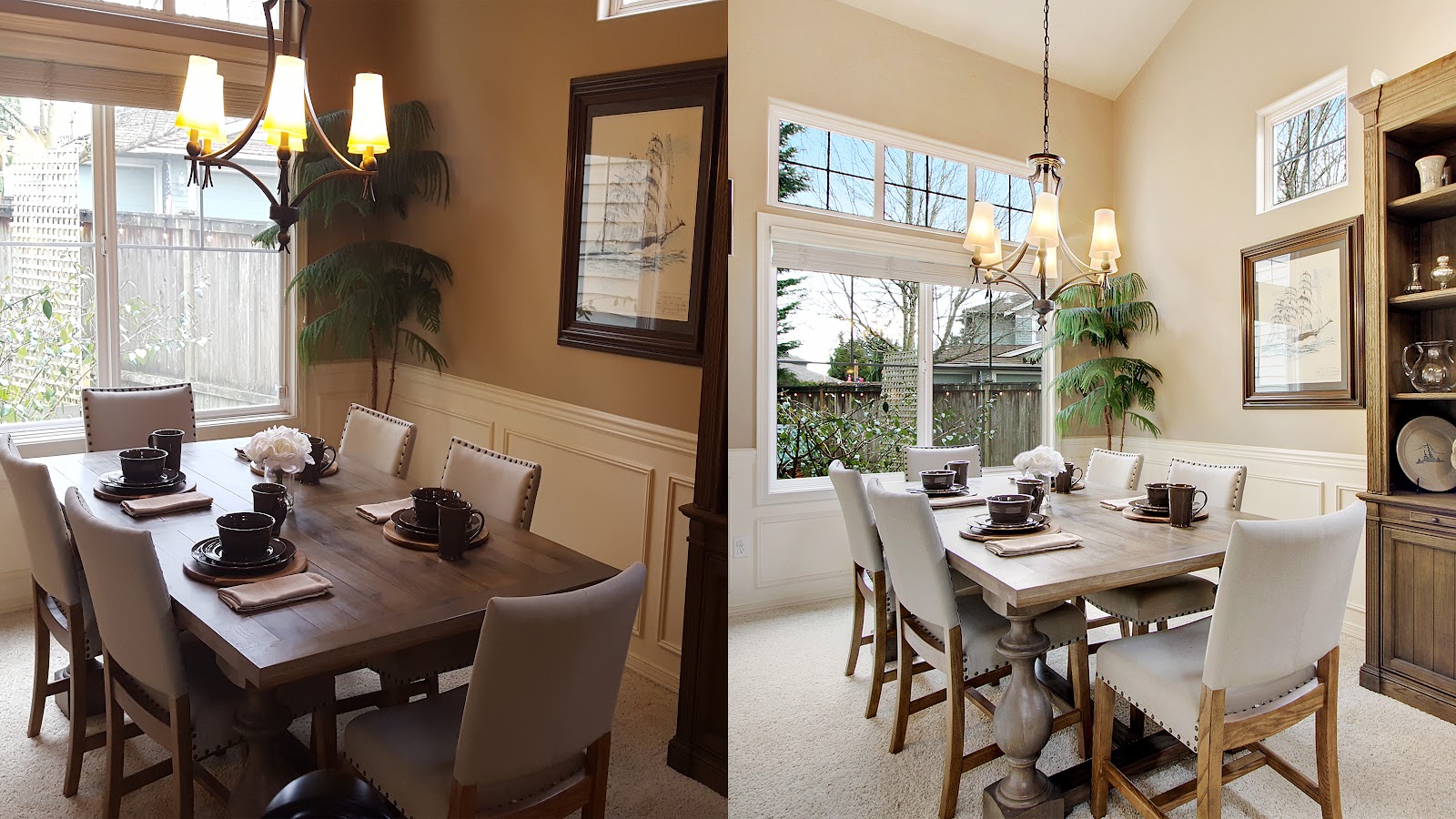
This photo is a great example of much of a difference it makes when a photo is taken with the correct composition, lighting and editing. 


In this photo, you can really see the impact editing a photo can have… the left side is more bright, vibrant, sunny, and pleasing to look at.


One thing a lot of people don’t realize is the difficulty of shooting indoors, and the challenges of fixing those issues. Things such as the time of day and lighting, the composition of a room and lack of staging expertise, images that need editing and vertical lines and distorted-looking results.


Another example is that all professional photographers should shoot the room in landscape. Landscape photography helps enhance the size of the room and captures everything in one shot. Shooting in portrait mode will do the exact opposite, cutting out vital aspects of the room, ultimately not providing potential buyers with a complete idea of each room's layout and overall composition. 


A professional photographer would bring all their own equipment, they can help stage rooms to better display their entirety, plus they can showcase your home not only with better quality photos but also with a warm and welcoming atmosphere. To say the least, there are definitely many benefits to hiring a real estate team and real estate professional photographer/videographer; these examples are just the beginning!


Read

Your Moving Checklist

There are so many details to handle as you prepare for a move. It can seem like a daunting task. But this checklist will help you manage the process and not forget anything.


Packing and Moving

  • If you’re hiring a moving company, get a firm bid in writing.

  • Try and consume canned food and frozen items before the move.

  • Drain gasoline from your lawnmower. Drain any water from the garden doses.

  • Dispose of any flammable or hazardous items. Do not move these if they can be easily replaced.

  • Moisten plants before moving.

  • Pack a “first night” box with coffee, bedding, household cleaners, toothpaste and toothbrush, pet food, and other essentials that you expect to need upon arrival.


The Important Stuff

  • Call utility companies (electric, water, cable) to cancel your current services and sign up for services in your new home.

  • Collect all of your important documents - birth certificates, passports, and medical. records, and carry these with you instead of packing them.

  • Have any necessary prescriptions filled and carry the medication with you.

  • Precious items such as jewelry on your family photo albums should also be carried with you instead of packed along with other household items.


Before You Leave

  • Conduct a last-minute walk-through. Check drawers, closets, the basement, and the garage.

  • Make sure everything is turned off and locked up.

Read

27 Valuable Tips You Need to Know to Sell your House Fast and for Top Dollar

Here are 27 Valuable Tips you should know to get your home sold FAST and for TOP DOLLAR!


Because your home may well be your longest asset, selling it is probably one of the most important decisions you will make in your life. To better understand the home selling process, a guide has been prepared from current industry insider reports. Through these 27 tips you will discover how to protect and capitalize on your most important investment, reduce stress, be in control of your situation, and make the most profit possible.


1.      Understand why you are selling your home.


Your motivation to sell is the determining factor as to how you will approach the process. It affects everything from what you set your asking price at to how much time, money and effort you’re willing to invest in order to prepare your home for sale. For example, if your goal is for a quick sale, this would determine one approach. If you want to maximize your profit, the sale process might take longer thus determining a different approach.


2.      Keep the reason(s) you are selling to yourself.


The reason(s) you are selling your home will affect the way you negotiate its sale. By keeping this to yourself you don’t provide ammunition to your prospective buyers. For example, should they learn that you must move quickly, you could be replaced at a disadvantage in the negotiation process. When asked, simply say that your housing needs have changed. Remember, the reason(s) you are selling is only for you to know.


3.      Before setting a price- Do your homework


When you set your price, you make buyers aware of the absolute maximum they have to pay for your home. As a seller, you will want to get a selling price as close to the list price as possible. If you start out by pricing your too high you run the risk of not being taken seriously by buyers and their agents and pricing too low can result in selling for much less than your home is worth.


Setting your homes sale price

If you live in a subdivision- If your home is comprised of similar or identical floor plans, built in the same period, simply look at recent sales in your neighborhood subdivision to give you a good idea of what your home is worth.


If you live in an older neighborhood- As neighborhoods change overtime each home may be different in minor substantial ways. Because of this you probably find that there aren’t as many homes truly comparable to your own. In this case you may want to consider seeking a Realtor to help you with the pricing process.


If you decide to sell on your own- A good way to establish a value is to look at homes that have sold in your neighborhood within the past 6 months, including those now on the market. This is how prospective buyers will assess the worth of your home. Also a trip to City Hall can provide you with home sale information in its public records, for most communities.


4.      Do some “Home Shopping” yourself.


The best way to learn about your competition and discover what turns buyers off is to check out other open houses. Note floor plans, condition, appearance, size of lot, location and other features. Particularly note not only the asking prices but what they are actually selling it for. Remember, if you’re serious about getting your home sold fast; don’t price it higher than your neighbors.


5.      When getting an Appraisal is a benefit.


Sometimes a good appraisal can be a benefit in marketing your home. Getting an appraisal is a good way to let prospective buyers know that your home can be financed. However, an appraisal does cost money, has a limited life, and there is no guarantee you’ll like the figure you hear.


6.      Tax assessments- What they really mean.


Some people think that tax assessments are a way of evaluating a home. The difficulty here is that assessments are based on a number of criteria that may not be related to property values, so they may not necessarily reflect your home’s true value.


7.      Deciding Upon a Realtor.


According to the National Association of Realtors, nearly two-thirds of the people surveyed who sell their own homes say they wouldn’t do it again themselves. Primary reasons included setting a price, marketing handicaps, liability concerns, and time constraints. When deciding upon a Realtor, consider two or three. Be as wary of quotes that are too low as those that are too high.

All Realtors are not the same! A professional Realtor knows the market and has information on past sales, current listings, a marketing plan and will provide their back round and references. Evaluate each candidate carefully on the basis of their experience, qualifications, enthusiasm and personality. Be sure you choose someone that you trust and feel confident that they will do a good job on your behalf.

If you choose to sell on your own, you can still talk to a Realtor. Many are more than willing to help do-it-your-selfers with paperwork, contracts, etc. and should problems arise, you now have someone you can readily call upon.


8.      Ensure you have room to negotiate.


Before settling on your asking price make sure you leave yourself enough room in which to bargain. For example, set your lowest and highest selling price. Then check your priorities to know if you’ll price high to maximize your profit or price closer to market value if you want sell quickly.


9.      Appearance’s do matter-Make them count!


Appearance is so critical that it would be unwise to ignore this when selling your home. The look and “feel” of your home will generate a greater emotional response than any other factor. Prospective buyers react to what they see, hear, feel, and smell even though you may have priced your home to sell.


10.  Invite the honest opinions of others.


The biggest mistake you can make at this point is to rely solely on your own judgement. Don’t be shy about seeking the honest opinions of others. You need to be objective about your home’s good points as well as bad. Fortunately, your Realtor, will be unabashed about discussing what should be done to make your home more marketable.


11.  Get it spic n’span clean and fix everything, even if it seems insignificant.


Scrub, scour, tidy up, straighten, get rid of clutter, declare war on dust, repair squeaks, the light switch that doesn’t work, and the bathroom mirror because these can be deal-killers and you’ll never know what turns buyers off. Remember, you’re not just competing with other resale homes, but brand-new ones as well.


12.  Allow prospective buyers to visualize themselves in your home


The last thing you want prospective buyers to feel when viewing your home is that they may be intruding into some else’s life. Avoid clutter such as too many knick knacks, etc. Decorate in neutral colors, like white or beige and place a few carefully chosen items to add warmth and character. You can enhance the attractiveness of your home with a well-placed vase of flowers or potpourri in the bathroom . Home-décor magazines are great for tips.


13.  Deal killer Odors-Must go!


You may not realize but odd smells like traces of food, pets and smoking odors can kill deals quickly. If prospective buyers know you have a dog, or that you smoke, they’ll start being aware of odors and seeing stains that may not even exist. Don’t leave any clues.


14.  Be a smart seller-Disclose everything!


Smart sellers are proactive in disclosing all known defects to their buyers in writing. This can reduce and prevent law suits later on.


15.  Its better with more prospects


When you maximize your homes marketability, you will most likely attract to more than one prospective buyer. It is much better to have several buyers because they will complete with each other; a single buyer will end up competing with you.


16.  Keep emotions in check during negotiations


Let go of the emotion you’ve invested in your home. Be detached, using a business-like manner in your negotiations. You’ll defiantly have an advantage over those who get caught up emotionally in the situation.


17.  Learn why your buyer is motivated


The better you know your buyers the better you can use the negotiation process to your advantage. This allows you to control the pace and duration of the process.

As a rule, buyers are looking to purchase the best affordable property for the least amount of money. Knowing what motivates them enables you to negotiate more effectively. For example, does your buyer need to move quickly. Armed with this information you are in a better position to bargain.


18.  What the buyer would like to chose


As soon as possible, try to learn the amount of mortgage the buyer is qualified to carry and how much his/her down payment is. If their offer is low, ask their Realtor about the buyer’s ability to pay what your home is worth.


19.  When the Buyer would like to close


Quite often, when buyers would “like” to close is when they need to close. Knowledgeable of their deadlines for completing negotiations again creates a negotiating advantage for you.


20.  Never sign a deal on your next home until you sell your current home


Beware of closing on your new home while you’re still making mortgage payments on the old one or you might end up becoming a seller who is eager (even desperate) for the first deal that comes along.


21.  Moving out before you sell can put you at a disadvantage


It has been proven that it’s more difficult to sell a home that is vacant because it becomes forlorn looking, forgotten, no longer an appealing sight. Buyers start getting the message that you have another home and are probably motivated to sell. This could cost you thousands of dollars.


22.  Deadlines create a serious disadvantage


Don’t try to sell by a certain date. This adds unnecessary pressure and is a serious disadvantage in negotiations.


23.  A low offer- Don’t take it personally


Invariably the initial offer is below what both you and the buyer knows he’ll pay for your property. Don’t be upset, evaluate the offer objectively. Ensure it spells out the offering price, sufficient deposit, amount of down payment, mortgage amount, a closing date and any special requests. This can simply provide a starting point from which you can negotiate.


24.  Turn that low offer around


You can counter a low offer or even an offer that’s just under your asking price. This lets the buyer know that the first offer isn’t seen as being a serious one. Now you’ll be negotiating only with buyers with serious offers.


25.  Maybe the buyer’s not qualified


If you feel an offer is inadequate, now is the time to make sure the buyer is qualified to carry the size of mortgage the deal requires. Inquire how they arrived at their figure, and suggest they compare your price to the prices of homes for sale in your neighbourhood.


26.  Ensure the contract is complete


To avoid problems. Ensure that all terms, costs and responsibilities are spelled out in the contract of sale. It should include such items as the date it was made, names of parties involved, address of property being sold, purchase price, where deposit monies will be held, date for loan approval, date and place of closing, type of deed, including any contingencies that remain to be settled and what personal property is included (or not) in the sale.


27.  Resist deviating from the contract

For example, if the buyer requests a move-in prior to closing, just say no, that you’ve been advised against it. Now is not the time to take any chances of the deal falling through.

Read

6 Things You Must Know Before Obtaining a Mortgage

Before you commit your hard earned dollars to monthly mortgage payments, consider these 6 issues.  Effective consideration of these important areas can make your payments work much harder for you.


1.      You can, and should, get preapproved for a mortgage before you go looking for a home.


Preapproval is easy, and can give you complete peace-of-mind when shopping for your home.  Your local lending institution can provide you with written preapproval for you at no cost and no obligation, and it can all be done quite easily over-the-phone.  More than just a verbal approval for your lending institution, a written preapproval is as good as money in the bank.  It entails a complete credit application, a certificate which guarantees you a mortgage to the specified level when you find the home you’re looking for.


2.       Know what monthly dollar amount you feel comfortable committing to.


When you discuss mortgage preapproval with your lending institution, find out what level you qualify for, but also pre-assess for  yourself what monthly dollar amount you feel comfortable committing to.  Your situation may give you a preapproval amount that is higher (or lower) than the amount of money you would want to pay out each month.  By working back and forth with your lending institution to determine what this monthly amount is, and what value of home this translates into at today’s rates, you won’t waste time looking at homes that are not in your price range.


3.      You should be thinking about your long term goals, and expected situation, to determine the type of mortgage that will best suit your needs.


There are a number of questions you should be asking yourself before you commit to a certain type of mortgage. How long do you think you will own this home? What direction are interest rates going in, and how quickly? Is your income expected to change (up or down) in the near term, impacting how much money you can afford to pay to your mortgage? The answers to these questions and other questions will help you determine the most appropriate mortgage you should be seeking.


4.      Make sure you understand what prepayment privileges and payment frequently options are available for you.


More frequent payments (for example weekly or biweekly) can literally shave years off your mortgage. Simply by structuring your payments so that they come more frequently will significantly lessen the amount of interest that you will be charged over the term.


For the same reason, authorized prepayment of a certain percentage of your mortgage, or an increase in the amount you pay monthly, will have a major impact on the number of years you will have to pay and could shorten your payment term considerably.


These two payment options can cut years off your mortgage, and save you thousands of dollars in interest. However, not every mortgage has these prepayment privileges built in, so make sure you ask the proper questions.


5.      Ask if your mortgage is both portable and/or assumable.


A portable mortgage, where available, is one that you can carry with you when you buy your next home and avoid paying any discharge penalties. This means that you will not have to go through the entire mortgage process again unless you are making a move up to a much more expensive home.

An assumable mortgage is one that the buyer for your home can take over when you move to your next home. This can be a very powerful tool at the negotiating table making it much easier for a buyer to buy your home, and again saves you any discharge penalties.


 6.      You should seriously consider dealing with a Mortgage Expert.


Consider dealing only with a professional who specializes in mortgages. Enlisting their services can make a significant difference in the cost and effectiveness of the mortgage you obtain. For example they can make the process faster thereby avoiding costly delays. Typically there is no cost or obligation to enquire.

Read
The Saskatchewan REALTORS® Association (SRA) IDX Reciprocity listings are displayed in accordance with SRA's MLS® Data Access Agreement and are copyright of the Saskatchewan REALTORS® Association (SRA).
The above information is from sources deemed reliable but should not be relied upon without independent verification. The information presented here is for general interest only, no guarantees apply.
Trademarks are owned and controlled by the Canadian Real Estate Association (CREA). Used under license.
MLS® System data of the Saskatchewan REALTORS® Association (SRA) displayed on this site is refreshed every 2 hours.