RSS

How to Pay off Your Mortgage Faster

Let’s make the assumption you are taking out a 300,000 fixed rate mortgage 4% interest rate over a 30 year loan period. With a mortgage payment, you have two components to it, you have the principle and you have the interest. The bank calculates how much you must pay every month over a 30 year period so at the end of it you owe zero. The monthly payment does not change, even if you’re going to pay more each month to lower the principle, your payment is going to stay the same. What is going to change is the amount you pay every month that goes to principal and the amount that goes to interest. 


Using our calculation, 4% of 300,000 is 12,000 annually, dividing that by 12 (for months in the year) is 1,000 interest in the first month. That is the most that you are ever going to owe. Your payment in this scenario is $1,432, so 432 is going to go toward your principal to reduce the amount that you owe. Then they do the same calculation all the way through, for month two, you just paid down 432. They’ll take this new outstanding balance that you owe (299, 568) and multiply that by 4%, divided by 12 and $998 is your interest due month 2. The amount above that is going to reduce the principle. The amount you pay each month is going to stay the same, but the amount you owe to the principal is going to go up a little each time and the amount to owe to the interest is going to go down a little each time. 


So if you decide you don't want to owe the bank this much interest over the years and you want to pay less interest. All you need to do is owe them less money. Instead of a 30 year mortgage you decide to go with a 15 year mortgage, you would cut the amount of interest you would pay substantially. However, your monthly payment would be much higher than with the 30 year. 


Let’s say you put an extra 3,000 yearly towards the 30 year mortgage, you would save around $60k in interest. Plus you would be done with the mortgage in 22 years. Or say, you think you could pay an extra 400 every month, you would save around $80k in interest and be done in about 20 years. 


If you’re interesting in paying off your mortgage faster and you’re focused on doing it, here are 4 tips to help you get there:


  1. Pay more money towards it - Just make random extra principal payments towards it. If you’ve got extra money laying around, go into the bank and throw some money at it. Make sure to say it's a principal payment.   


  1. Do Bi-weekly Payments - Instead of paying 12 monthly payments, you’re paying 24 bi-weekly payments, which is the equivalence of 13 full payments. 


  1. Make payments as if it was a 15 year mortgage - This way it’s fine if you take out a 30 year mortgage, this gives you the flexibility, so if you don’t have the money one month you can still make the original payment. But if you do have the money, pay it and it will go that much faster.


  1. Refinance to a lower interest rate - Interest rates are quite low right now, so refinancing might make sense to you. Just make sure you can save enough on the interest rates to make it worthwhile. 


Unfortunately there isn’t an easy way or easy fix to getting rid of your mortgage instantly. The best thing to do is keep putting money into the principal mortgage. 


Read

How To Change From Spring To Summer In Home Décor

It doesn’t hurt anything to trade accessories a couple times each year based on the season. Adding tiny bits of color to a room for spring and summer and making easy updates help make the transition and freshen up a space! We gladly welcome the change of seasons for an opportunity to breathe new life into our homes and make things a little different. Here are a handful of simple updates you can make this summer season…


Incorporate white fabrics // Keep it light with white; cream, and sand.


Decorate with flowers // When house plants get moved outside to soak up more of the hot summer sun, decorate inside with fresh flowers, which make a room more cheerful, bright and playful. Of course, more greenery never hurts.


Get the outside ready // Get your garden looking good, your patio set up with table and chairs etc. White fairy lights are another summery touch that add a little something extra, and don't forget the barbecue and fire pit.


Accessorize with citrus // Keep your fruit bowls filled with bright and in season fruits. Something like a bowl of oranges brings a lively and natural bit of colour.


Bring in the beach // Shells, coral, anything that reminds you of the beach and beachy vibes, you can’t get more summery than that. 


Rotate your art // Have a few pieces that you can rotate out every season for a little bit of a change up, keep the bright prints for the summer.


Update pillows // Pillows are one of those easy accessories that can also be rotated out every couple seasons to accentuate on the sense of the time of the year. The same goes for curtains, throws, bedding, and any other easily exchangeable items.


Consider Scent // Believe it or not, the fragrance of your home really influences the aesthetic. A pleasant and clean smelling home is just more inviting! Each season you can try to add a new great smelling candle to your collection, or if you’re not into candles, try a diffuser or a scentsy.


Choose a pastel or primary palette for your accent colours // Keep your all-year round furniture in neutral colours and then have your soft furnishings or accent pieces in the crazy prints or wild colours. But try to not over complicate your colour palette in a room, keep it simple. 


Clean & Organize // Last but not least, try to do a good deep clean every season. This helps to keep the house rid of clutter, organized, and tidy. It’s less overwhelming than a once a year sort of cleaning and it makes a home feel more comfortable.
Read

All You Need To Know About Home Inspections

So imagine you’re a buyer and you find the perfect house for you, you put in an offer and your offer gets accepted! You’re so close to the end of this home buying journey but before we can close on the purchase of your new home, there’s a few more steps to make sure the purchase is a sound decision. 


The Home Inspection:


As a buyer you have the opportunity to hire a professional inspector to evaluate the condition of the home. An inspection clause is included in the written contract given to the seller. 


The goal of a home inspection is to give you an objective independent and comprehensive analysis of the physical condition of your potential new home and check for any safety issues that might otherwise be unknowable.


A professional inspector will check on the structure, construction and mechanical systems of the house. This usually includes checking these areas:


Electrical Systems

Plumbing

Water Heater

Insulation

Ventilation

HVAC System

Water source and quality

Lead paint

Pests

Foundation

Doors

Windows

Ceilings

Walls

Floors

Roof

Radon gas

Asbestos


You will receive a written report on the inspection. If you choose to be present during the inspection, you can ask your inspector about unique features of the property and get his or her opinion on the necessary maintenance for different areas of the property.


Depending on the results of the inspection, you will have the opportunity to:


  • Get out of the written offer if major problems are discovered

  • Renegotiate the purchase price to account for necessary repairs

  • Negotiate what repairs are made by the seller before final purchase of the property


Our office has some trusted inspectors for you to choose from. We will arrange the inspection time for you.


Read

9 Things That Can Make Your Home Look Cheap

There are certain decorating trends from the past that may be lingering in your home now. These were probably trending at some point in time but now they are only taking away from the appearance of your home. Make just a little bit of adjustments and you’ll see the difference!


Curtains That Don’t Touch The Floor | You want your curtains to just be touching the floor, or else it will look like you’ve purchased curtains that were too small for your space. Also when you’re getting curtains, you want them as close to the ceiling as possible, higher curtains make a room feel larger. Big homes are of course correlated to luxury, so if you want to achieve that feel in your home, you’ll want to make your home feel as big as possible. Width matters as well, they should extend at least a few inches on either side.


Not Styling Your Furniture | It’s okay to buy IKEA furniture, but you have to style it. If you don’t add your own twist or decor, it will just look that much more like an IKEA set. You want it to be affordable but also look nice at the same time. Add some art, some decor, and style and arrange that furniture. You can also buy the IKEA dresser but throw some nicer handles on it. We want people to know we spent time thinking about our home, curating the objects we chose, and representing ourselves. 


Buying Cookie Cutter Art | The third thing that is going to make your place look cheap is that you’re buying the art that everyone has. In those luxury homes, they searched for just the right art for each room. Art is something that should be specific and unique to your home, not just what everyone else is buying. You don’t have to try to convince people that it’s an original or you commissioned it, but you want something that’s going to look amazing and that’s perfect for your home.


Buying Rugs That Are Too Small For Your Space | This is definitely something that will make your place look cheap, and it’s an easy fix. A small rug that doesn’t fit the space is going to look like you just went out and bought the first thing you could find. It can actually also make a room look smaller. You want the rug properly scaled to fit in your space, but you also want the furniture in the space to touch the rug. Measure before you shop!


Be Done With The Plastic Furniture | Leave the plastic furniture in college! Obviously plastic furniture is cheap, it breaks, you can see through it. You can have it in your closet or use it for storage, but no one wants it out for everyone to see. It isn’t furniture, it’s just storage for private places. 


All Leather Furniture | We know it might have been all the rage at one point, but if your entire living room is all leather furniture, that’s just not it anymore. Not saying that you can’t have leather pieces, because that will of course work. However leather tends to be dark, it makes a space look smaller, it’s just not going to work for everything to be leather. Leather isn’t ugly, we just can’t crowd it in one space. We won't buy one leather piece, we want it to stand on its own. Too much of the same thing is going to look cheap. You don’t need to throw it out, but just spread it apart. 


Having Cords Exposed | We all struggle with this one. But having all the TV cords flung all around for everyone to see, just looks bad. Take 5 minutes to just clean some of these up, run the extra extension cord, because the truth is, the big mess of cords… looks messy! 


Light Fixtures Not Appropriately Sized | Things like chandeliers are meant to be a statement, and when they’re too small for a space, they come off looking cheap. This also applies to lamps on tables, proportions are everything, you can't have a large lamp on a small table. 


Clutter and excess | Less is more, especially when it comes to the amount of “stuff” on view in your home. Too much of something can be a distraction on the things we should be focusing on in your home. When someone walks into my home I want them to notice a beautiful art piece, or a unique piece of furniture, not the abundance of things on my counter. Stay simple and stay tidy.
Read

Do's and Don'ts Before Closing Day

So, you are already under contract for the house, an offer has already been accepted, and you have that waiting period before the possession date. 


Here are the don’ts on what you should do before closing day:


  • Do not finance anything - meaning on furniture etc do not open a credit on things like that. You should wait after closing to purchase any large items, during this time.

  • Do not change employment - even if it is for the same pay, you want to stay the same during your loan application. 

  • Don’t co-sign on other loans - you don’t want to do anything that will have an affect on your banking at all. 

  • Don’t pay off large balances on your credit card - unless your mortgage broker specifically tells you to, don’t make any of those decisions on your own. 

  • Do not accept any gift funds without lender approval - the bank wants to know where that money came from.

  • Do not drive by the house and talk to the seller by yourself without your agent - you both are being represented by agents and any negotiating without them could get you burned some way or another. It can easily become a “he said/she said” scenario. 


And with that, let’s get into to do’s:


  • Do keep saving - it is always good to have a little extra money in the bank.

  • Stay on top of paperwork - you want to get your paperwork over to your lender as soon as possible. This will give you as much time as you’ll want for you to close in time. 

  • Stay in touch with your agent - You want to be accessible to your agent for any paperwork that might need your signature. There’s lots of documents that can pop up that they may need you to sign right away. 

  • Get a home inspection - While you’re waiting on financing to get approved, schedule in for your home inspection. You get into the home, learn more about the home, knowing what you’re getting into and that you are happy with the condition of the property. 

  • Make moving arrangements - Take some time to let your landlord know what’s happening, or if you have any problems with where you are living currently you need to make those arrangements ahead of time, and not be waiting for the last minute. 

Read

The Best Trends in 2021

I know we all like to think we are individualistic and unique and choose what we like. Whether we like it or not, we are influenced by popular trends and the mass media on what we like and what we don’t like. Those trends become what’s available to us in stores and becomes what we see everywhere. 


Return to Tradition | Coined “grandmillennial” or “granny chic” this trend could have a lot to do with COVID 19. We learned that our home is our sanctuary, and so a return to traditionalism, coziness, comfort, because that’s what we want out of a home. The style of this return to traditional and the familiar is called Grand Millennial. Characteristic of this style is a lot of traditional furniture, lots of patterns, wallpaper, sort of a modern take on english countryside. So keeping it out of the “granny” but a nod to it. 


Earthy Colours | We’re going to be seeing a lot of blues, greens, coppers, browns, mustard yellow. You can probably already see these colours in stores now. Warm colours also help achieve a warm and cozy interior.


Lighter Woods & Nature | Again, this could be a trend related to COVID. This is a trend of wanting to return to nature, to the organic. It’s not fussy, it's easy, lots of greenery and plants. Lighter wood tones go with any style as well. Bringing in jutes, wools, linens, light wood colours, marbles, anything you would find in nature, that’s going to be in tune for what we will see happening in 2021.


Curved & Rounded | What’s going to be in will be curved or rounded furniture. Things that are postmodern and think 1980’s. Geometric furniture is still very much in, but focuses on things that are more minimal, and more dramatic shapes. 


Plants, Plants & More Plants | It’s all back to basics, plants help to purify the air and brighten your mood. Plus it doesn’t have to cost much, just get a plant that’s easy to take care of if you don’t have the greenest thumb around.


Tidy Multi-functional Spaces |  More spent indoors and more home offices means it makes less sense to have a room with only one purpose. The design of home offices will focus on uncluttered minimalistic set-ups. Furniture with clean lines but that has space for storage will be essential.


Feng Shui | The art of finding harmony, balance and flow - all the themes of 2021. Incorporate some feng shui principles is a great way to start.


Robust Wicker and Rattan Furnishings | Woven rattan furniture and decor are durable while adding texture and a natural, light feel to a room. Textiles of any kind are always good to add to a room.


Welcome Back Wallpaper | You can use wallpaper to create a statement wall. Peel-and-stick wallpaper is also excellent for renters and those who like to change their space frequently.


Read

16 Easy Tips For A More Eco-Friendly Home


Happy Earth Day! Are you wondering what are some things you can start doing at home to reduce your impact on the environment? Single use plastics and CO2 emissions are the biggest sources of pollution. Not everyone can afford solar panels or energy star appliances but we all can make a difference. Here are some quick and easy changes you can make today that can help make that difference. Plus they could also save you some $$. Why not go green?


Turn off everything when you’re done - seems quick and simple right? That’s because it is. The less energy you end up using, the better.


Wash clothes in cold water - 90% of energy used by a washing machine is to heat the water.


Skip the dryer when possible - it helps to have a neat drying rack but a traditional clothesline will do.


Swap regular light bulbs for LED - they use less energy and they last longer.


Use a programmable thermostat - save and drop the temperature when you’re not home.


Get a recycling bin and compost bin - if you have the bin, you’re going to use it. As for the compost, think free fertilizer.


Get a water filter instead of bottled water - this goes for all single use plastics. Bottled water isn’t necessary if you get a water filter - of any kind.


Replace old appliances for newer energy efficient ones - not saying go buy them all at once, but when you’re shopping to replace something, keep efficiency in mind.


Donate to and shop at Thrift Stores - save money, support your local economy, and recycle perfectly usable items.


Pay bills online - it’s faster and eliminates paper! That goes for subscriptions too - move it all online.


Use cloth kitchen towels and napkins - paper towels and paper napkins are fine to use sometimes, but less IS more when it comes to the environment.


Use eco-friendly cleaning products - they work just as well and have less harmful chemicals, plus you can make your own with products like vinegar, baking soda and lemon juice.


Waste less food - shop more efficiently, so you waste less food ultimately with less ending up at landfills.


Turn down your water heater - is your hot water scalding or too hot to touch? Then you can probably turn it down a bit.


Buy local - shop from local farmer’s markets, even better start your own garden!


Collect rain water - waste less water on water plants and your garden.

Read

4 Tips For Buying A House Long Distance

5 Tips for buying a house long distance


  1. Do your Research - Figure out where you want to live, based on what’s important to you. Commute distance, school distance. Start trying to narrow down your favourite homes with your research. So if you do make a trip to view homes on a weekend, you want to view the best candidates and make the best use of your time when you come to town. 

  2. Find the Right Real Estate Agent - You want an agent that can work with you long distance. Someone who will give you virtual tours of homes, and do all they can to help you hunt for a home long distance. 

  3. Know your market - rely on your real estate agent to inform you if it is a buyers or sellers market, and will help you decide on an appropriate offer price that will help you get the home you want. 

  4. Do your inspections - Even if you are not in town, your agent can attend the home inspections on your behalf. It’s important to not skip on the inspections if you’re not personally there checking through all these things yourself.

Read

Popular Decorating Trends To Avoid In 2021

Along with everything else in 2020, there are certain decorating trends that just shouldn't stick around in 2021. Here’s are some popular trends to avoid this year, that may be surprising to you:


  1. Barn Doors | Maybe you’ve tried them, maybe you love them, but the barn door phenomenon is going out the door. When you’re trying to master your interior decorating style, you have to create an overall environment which requires the architectural shell and then all the pieces in it which brings the eye up and around with color and texture that creates that whole experience. So if you really love the rustic farmhouse, the barn doors are just one thing you could do to achieve that style. 


  1. All Grey Everything | The reality of an all grey interior is that it keeps you stuck in a cold and impersonal interior. It’s also very difficult to decorate in warm or “happy” tones when you have a very grey base. The biggest mistake nowadays when you’re picking floors is to go with that grey flooring, because you’re locking yourself into that cool colour palette. Everything that we have been seeing coming out recently are more saturated and brighter colours or muted tones of those brighter colours. But it’s all moving away from the all grey interiors. White is still the most universal paint colour, and usually cannot go wrong with it.


  1. All White Kitchen | We love an all white kitchen, but it’s going out in 2021. The truth is it can come off as boring and the design world is over it. Yes subway tile is amazing, but since it’s been done so much, that’s not the direction things will be going in for much longer. To change up an all white kitchen to bring a little life into it, you can paint the bottom cabinets a darker colour that goes along with the colour palette of the rest of the kitchen. Leaving the top cabinets white grounds the space, and brings the eye up. You could also paint just the island a darker colour, which stands out from the all white kitchen. Basically you just need to through something off with colour or material or texture. 


These are the three beloved trends that are on their way out in 2021. Let’s push ourselves, try something new, and leave 2020 behind us!


Read

Spring Cleaning Tips

Longer days, sunshine, and melting snow can only mean one thing: It’s time to bust out the cleaning supplies. Though no doubt rewarding (cleaning can help you manage stress!), the annual cleanse is a daunting task. Where do you even start when you have a closet in serious need of organizing and stained carpets, plus a whole host of other things on your to-do list? You’ve probably got the basics down, but here’s a few things you can add to your cleaning to-do list.


First, organize

What areas need the most work? What usually gets left out of regular cleaning? Make note of some of these things, so you know what to include in your spring cleaning to-do list.


Work from the top to the bottom

It makes more sense to vacuum AFTER  knocking off that ceiling fan dust right? Cleaning from the top of your home to the bottom is a more efficient way of cleaning. Don’t forget the walls and windows either, erase those annoying wall scuffs you’ve been ignoring. Purify the air - leave windows open for a few hours to freshen up stagnant air. You should also take the time to clean window screens, sills and blinds. 


For flooring, if you own carpet or any area rugs, shampooing them can make them look brand new. Cleaning up those dirty baseboards can also make a huge difference.


Kitchens & bathrooms are a must

Put in some elbow grease and clean the grout in your showers/tubs. Include your shower curtain in the list and yes, you can wash your shower curtains in the washing machine.

Flush kitchen and bathroom drains, to avoid any clogging; this includes shower drains and garburator. Deep clean all those neglected appliances; run some white vinegar through your dishwasher, clean out the grime inside your fridge, oven and microwave, but don’t avoid pulling out your stove/fridge and getting in to clean behind beneath and on top of them. Take some time to go through and organize your pantry and cupboards. In all rooms but especially kitchens and bathrooms, make an effort to disinfect garbage cans.


Declutter

Not only does decluttering your home help you stay organized but it will make you feel better. Studies have shown that a disorganized home adds to your stress level. You might be surprised at how good you feel after getting rid of that dreaded junk drawer, or cleaning off those surfaces that have a knack for collecting junk. Closets are also a popular space that’ll need a little organization.

Not all of these extra things taking up space in your home have to end up in the garbage, consider hosting a garage sale or donate some of the stuff you don’t use anymore.


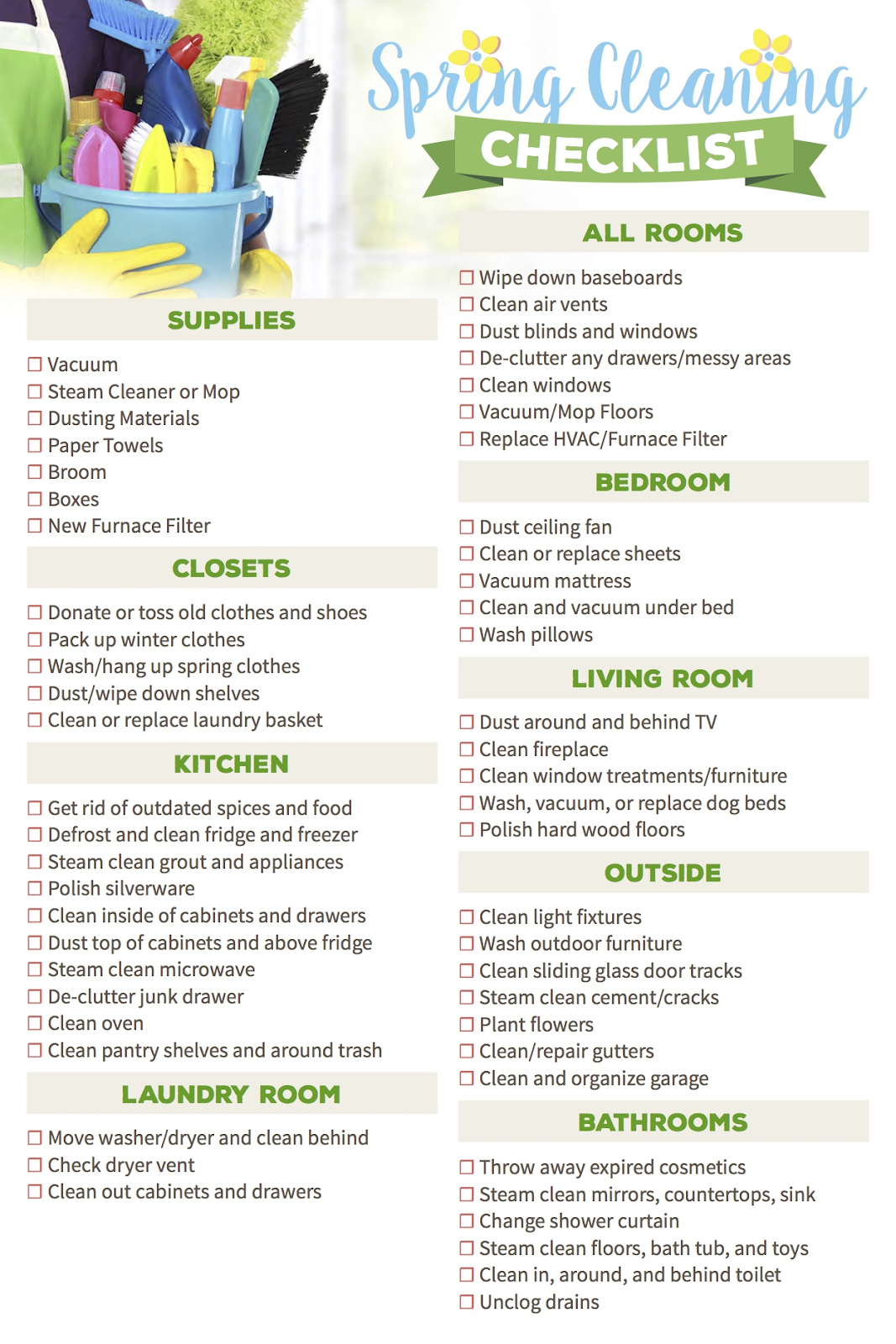
Below is a checklist you can use as a starting point for your cleaning this spring 2021!


Read

Tax Season Tips for Homeowners

Get the most out of your home, requires itemizing deductions. Be sure to check with your tax professional to make sure you’re eligible for these exemptions, deductions and credits:


Mortgage interest is the most common tax deduction homeowners think about when putting their tax forms together. 


First time home buyer tax credit that you can file on your taxes when filing for CRA and you can claim up to $5,000 dollars, which adds $750 to your tax refund. If you did buy a home in 2020, or you haven't lived in a home owned by you or your spouse in the last four years,  you can claim it on this tax.


If you and/or your spouse or common-law spouse are a resident of Canada with qualifying Registered Retirement Savings Plan (RRSP) contributions, one or both of you might be eligible for a tax-free withdrawal toward buying your first home. Under the Home Buyers' Plan (HBP), first-time home buyers or previous homeowners who haven't owned a home within the preceding four years can withdraw up to $35,000 tax-free to use toward a down payment on a home. There is one thing to keep in mind: you have to 'repay' the borrowed amount via RRSP contributions within 15 years, and if withdrawals under the HBP aren't paid back, they'll become taxable. Learn what's involved at the Canada Revenue Agency's (CRA) Home Buyers' Plan page.


Did you pay a Goods and Services Tax (GST) or Harmonized Sales Tax (HST) on a home that was newly built or substantially renovated? You might be able to take advantage of a new housing rebate (a partial refund to someone who has paid too much money for tax, rent, or a utility) on part of the tax.


If either you or your spouse or common-law partner meets the CRA eligibility requirements for a person with disabilities, you may be able to enjoy the Home Buyers' Tax Credit even if you aren't a first-time home buyer.


If you meet one of the following three criteria, the Home Accessibility Tax Credit  (HATC) could help you save taxes on an eligible renovation costing up to $10,000:

  • You're homeowner and you qualify for the disability tax credit

  • You're eligible to make a claim for a qualifying individual

  • You're over 65 years old

The renovations have to be permanent, make the home more accessible or reduce the potential harm to the qualifying individual, and be completed by qualified professional tradespeople.


Do you own real estate (including farmland) that you rent out? If so, don't forget to declare your rental income on your taxes. You could claim allowable expenses such as advertising fees, property taxes, insurance, and interest on money you borrowed to purchase or renovate the rental property. You could also claim Capital Cost Allowance  (CCA) as a deduction on renovations to your rental property as a depreciating asset. Note, though, that while you can claim the renovation costs in the year they're completed, when you sell the property you might end up paying taxes on the value of the CCA claims via capital gains. Because of this, you'll want to exercise care when writing off anything related to renovating your rental property.the rental income must be reported as income and taxes on the rental income must be paid


When you move more than 40 kilometres away to attend school full time, launch a new business, or take a new job, your moving expenses could be tax-deductible. Moving company bills, hotel bills, and legal fees are just a few of the possible eligible moving costs  you could claim.


If you work remotely, these credits might come in handy this tax season. Eligible homeowners could be self-employed, working on commission, or even professionals working from a home office. Typical eligible home office expenses  could include a portion of your utility bills, homeowners' insurance, internet bills, office supplies, and so much more. When you're offered money to help you build a strong foundation for your life, why wouldn't you accept it? Taking the time to investigate which homeowners' tax credits you qualify for this tax season could help you keep more of your money in your own pocket. Now you just have to figure out what you're going to do with it.


Read

4 Tips For Buying A Home Long Distance

For whatever reason, you need to buy a home out of your current city or province even. Don't worry, we've got you covered... Here are 4 Tips for buying a house long distance


  1. Do your Research - Figure out where you want to live, based on what’s important to you. Commute distance, school distance. Start trying to narrow down your favourite homes with your research. So if you do make a trip to view homes on a weekend, you want to view the best candidates and make the best use of your time when you come to town. 

  2. Find the Right Real Estate Agent - You want an agent that can work with you long distance. Someone who will give you virtual tours of homes, and do all they can to help you hunt for a home long distance. 

  3. Know your market - rely on your real estate agent to inform you if it is a buyers or sellers market, and will help you decide on an appropriate offer price that will help you get the home you want. 

  4. Do your inspections - Even if you are not in town, your agent can attend the home inspections on your behalf. It’s important to not skip on the inspections if you’re not personally there checking through all these things yourself.

Read
The Saskatchewan REALTORS® Association (SRA) IDX Reciprocity listings are displayed in accordance with SRA's MLS® Data Access Agreement and are copyright of the Saskatchewan REALTORS® Association (SRA).
The above information is from sources deemed reliable but should not be relied upon without independent verification. The information presented here is for general interest only, no guarantees apply.
Trademarks are owned and controlled by the Canadian Real Estate Association (CREA). Used under license.
MLS® System data of the Saskatchewan REALTORS® Association (SRA) displayed on this site is refreshed every 2 hours.